UHMWPE — Ultra-High Molecular Weight Polyethylene
Same chemistry as HDPE, but with chains 10× longer. The result is the most abrasion-resistant thermoplastic on earth — outwearing carbon steel by a factor of seven in coal, ore and slurry handling.
ISO 9001:2015 by SGS · DVS 2207 welders · Brisbane, since 1971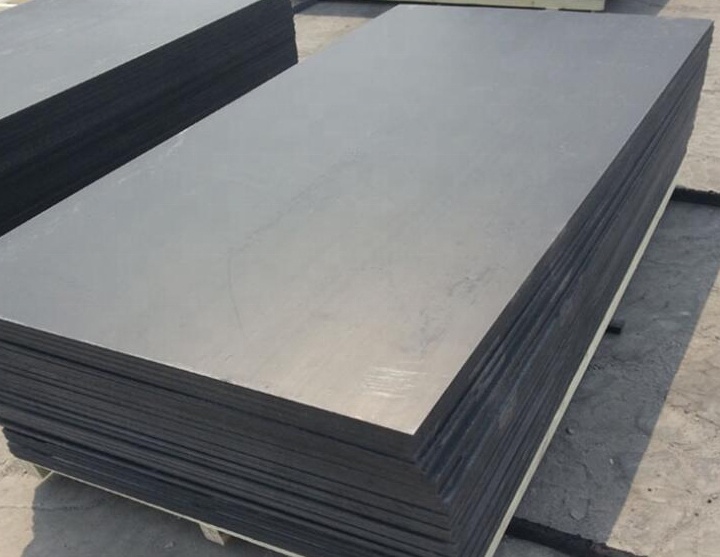
Why UHMWPE wins where steel fails
UHMWPE has identical chemistry to HDPE — the same long chain of CH₂-CH₂ repeating units — but the chains are an order of magnitude longer. HDPE has a molecular weight in the 200,000–500,000 range; UHMWPE sits between 3 and 6 million. Those long, tangled chains physically interlock, dramatically improving wear resistance, impact strength and chemical inertness. The same property that makes the material outstanding (extreme molecular weight) also makes it impossible to extrude through a die or weld with traditional plastic-welding methods. UHMWPE is supplied as ram-extruded or compression-moulded sheet, rod and profile, and is mechanically fastened or hot-pressed in place.
Engineering properties
| Property | UHMWPE | HDPE (reference) |
|---|---|---|
| Molecular weight | 3–6 million g/mol | 200,000–500,000 g/mol |
| Density | 0.93–0.94 g/cm³ | 0.94–0.97 g/cm³ |
| Tensile strength (yield) | 21–28 MPa | 22–30 MPa |
| Notched Izod impact | No break at 23 °C | 20–220 J/m |
| Service temperature | −200 to +80 °C | −50 to +60 °C |
| Sand-slurry abrasion (vs steel = 100) | 14 | 56 |
| Coefficient of friction (vs steel) | 0.10–0.20 | 0.25 |
| Water absorption (24 h) | <0.01% | <0.01% |
| Chemical resistance | Excellent against acids, alkalis, salts, alcohols. Inert to most aqueous service. Same chemistry as HDPE. | |
| Joining | Mechanical fastening (recessed CSK bolts), hot-press lining | Welded by extrusion, butt-fusion |
Why we don't weld UHMWPE. The same long chains that give the material its toughness prevent it from melting cleanly — it never reaches a true molten state. Welds in UHMWPE are mechanically inferior to the parent material and we don't recommend them for wear-critical service.
Where we use UHMWPE
Chute and hopper liners
Bolted-in UHMWPE wear liners in transfer chutes, ore bins, coal hoppers and feed-trays at mine sites including Rio Tinto and BHP installations.
Chute liners →Conveyor and slide components
Skid plates, deflector strips, side rails, wear-strips. Self-lubricating. Eliminates galling and the need for grease on moving parts.
Custom fabrication →Marine bumpers and dock fenders
UHMWPE marine fender face-plates and rubbing strakes. UV stable, salt-water inert, takes vessel-impact loads without cracking.
Marine →Cryogenic-service components
Stays tough down to liquid-nitrogen temperatures (−196 °C). Used in cryogenic plant for LNG, ammonia and oxygen handling components.
Energy applications →Standards we engineer to
- AS/NZS 4929 — Abrasion-resistant polyethylene for slurry handling.
- FDA / FSANZ 1.4.3 — Food-contact grades for hopper, chute and conveyor work in food processing.
- ISO 11542 — UHMWPE moulding and extrusion materials specification.
Other engineering plastics we machine and weld
Got a wear problem you can't solve with steel or HDPE?
Send the duty (material handled, particle size, drop height, throughput) and we'll spec the right UHMWPE grade and thickness.
Request a quote